Source Adult Diaper Production Line for Adult, Baby, and Medical Uses
Explore 30 listings for the adult diaper production line to compare specifications like speed, automation, and certifications. Buyers can evaluate options for manufacturing adult, infant, and medical hygiene products with varying power sources and control panels.
Key considerations
Products List


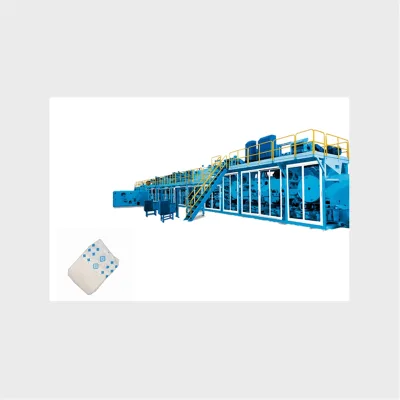


High Efficent Adult Diaper Production Line with Adult Diaper Packing Machine Solutions
$600000.00 - $1200000.00
Moq: 1


Comprehensive Sourcing Guide
Strategic Sourcing Guide for Adult Diaper Production Lines
Selecting an adult diaper production line is a capital-intensive decision that requires a rigorous evaluation of technical capabilities, compliance standards, and operational efficiency. The global demand for adult hygiene products continues to expand, driven by demographic shifts and increased awareness of incontinence care. For procurement professionals, the objective is to identify machinery that balances high throughput with the flexibility to adapt to varying product specifications. This guide synthesizes available market data to provide a structured approach for evaluating potential suppliers and production assets, ensuring that the final investment aligns with both immediate production needs and long-term strategic goals.
Technical Specifications and Production Capabilities
The core of any diaper manufacturing line lies in its mechanical design and production speed. When evaluating an adult diaper production line, buyers must scrutinize the stated production speed, as this directly dictates the return on investment. Market observations indicate a significant variance in output capabilities, with some systems operating between 150 and 400 pieces per minute, while others are engineered for speeds exceeding 400 pieces per minute. This disparity suggests that the "one-size-fits-all" approach is ineffective; the optimal machine depends heavily on the target market volume and the specific product configuration.
Automation levels are another critical technical differentiator. The market presents options ranging from fully automatic systems to semi-automatic configurations. Fully automatic lines typically integrate advanced computer control panels, allowing for precise management of the lamination, cutting, and folding processes. In contrast, semi-automatic options may lack integrated computer control panels, relying more on manual intervention for certain stages. The choice between these grades impacts labor costs and consistency. Furthermore, the material processing technology is essential; most modern lines utilize laminated machine processes to bond nonwoven fabrics with other materials effectively. The power source requirements also vary, with common specifications including 380V/50Hz inputs, which must be compatible with the facility's electrical infrastructure.
Compliance, Certification, and Safety Standards
Navigating the regulatory landscape is paramount when sourcing industrial machinery. Compliance ensures that the equipment meets international safety and quality benchmarks, reducing liability and facilitating market entry. In the current market, the CE certification is a frequently observed standard, indicating conformity with health, safety, and environmental protection standards for products sold within the European Economic Area. Some suppliers also list UL certification, which is particularly relevant for electrical components and safety in North American markets.
Beyond product certifications, the manufacturing standards of the facility itself play a crucial role. Buyers should verify if the supplier adheres to ISO 9001 quality management systems, which is a common benchmark for consistent quality. While some documentation references ISO 13485, which is specific to medical devices, this should be treated as a high-level background indicator rather than a guaranteed attribute of every listed machine without specific verification. The standardization of the machine's output is also vital; specifications often reference size categories such as M, L, XL, and XXL, ensuring the machine can produce the full range of adult sizes required by the target demographic.
Cost Drivers and Pricing Structures
Understanding the cost structure of an adult diaper production line is essential for budgeting and financial planning. The observed price range in the market is substantial, spanning from approximately 55,000 USD to 1,200,000 USD. This wide variance is not arbitrary; it is driven by several key factors including the level of automation, production speed, and the complexity of the control systems. A machine capable of speeds exceeding 400 pieces per minute with full computerization will naturally command a higher price point than a semi-automatic unit with a speed of 150 pieces per minute.
The minimum order quantity (MOQ) is another financial consideration. In many cases, the MOQ is set at a single unit (1 set), which lowers the barrier to entry for smaller manufacturers or those testing a new market. However, buyers must be aware that the unit price is often influenced by the specific configuration chosen, such as the inclusion of a computer control panel or specific color schemes like blue and silver or ivory white. Additionally, packaging requirements, such as wooden crates, wooden boxes, or transparent film, can add to the overall logistics cost. Buyers should request a detailed breakdown of costs to understand what is included in the base price versus what constitutes an add-on expense.
Typical Applications and Product Versatility
The versatility of the production line determines its ability to adapt to changing market demands. While the primary focus of these machines is the production of adult diapers, the underlying technology often allows for the manufacturing of infant diapers as well. This dual capability is a significant advantage for manufacturers looking to diversify their product portfolio without investing in separate production lines. The distinction between the two applications often lies in the product specifications, such as size (Small, Large, Extra Large) and the specific process parameters used during lamination.
The finished product output is a direct result of the machine's configuration. The process typically involves the conversion of raw nonwoven materials into finished hygiene products. The efficiency of this process is a key metric, with some systems claiming efficiencies around 90% to 98%. This high efficiency is critical for maintaining profitability, as it minimizes material waste and maximizes output per hour. The machine's ability to handle different product objects, from infant to adult, underscores the importance of selecting a system with adjustable parameters that can be easily reconfigured for different product runs.
Supplier Evaluation and After-Sales Support
Selecting the right supplier is as important as selecting the right machine. A reliable supplier provides more than just hardware; they offer a comprehensive support ecosystem. One of the most critical aspects of this support is after-sales service. Buyers should prioritize suppliers that offer video technical support, which allows for remote troubleshooting and reduces downtime during the initial setup phase. Furthermore, the availability of field maintenance and repair services is essential for ensuring long-term operational continuity.
The location of the supplier is another factor to consider. Many manufacturers are based in China, with specific hubs in regions like Fujian. While the geographical origin can influence shipping costs and lead times, it does not inherently dictate the quality of the machine. However, buyers should verify the specific origin details to ensure transparency. The condition of the machine is also a key evaluation point; the market primarily offers new equipment, which is preferable for ensuring a full warranty period and optimal performance. Buyers should also inquire about the customization options available, as the ability to tailor the machine to specific production needs can be a decisive factor in the purchasing decision.
Quality Control and Long-Term Procurement Considerations
Implementing a robust quality control framework is essential for maintaining the integrity of the production line. Buyers should verify that the machine's output meets the required standards for the finished product, including the consistency of the lamination and the precision of the cutting. The production speed, whether it falls within the 150-400 pcs/min range or exceeds 400 pcs/min, must be sustainable over long operating hours without compromising quality.
Long-term procurement considerations extend beyond the initial purchase. The availability of spare parts, the ease of maintenance, and the potential for future upgrades are critical. The standardization of the machine, such as adherence to CE and ISO standards, ensures that the equipment remains compliant with evolving regulations. Additionally, the packaging of the machine, whether in wooden crates or other specialized containers, plays a role in protecting the asset during transit and storage. Buyers should also consider the environmental impact and energy efficiency of the machine, as these factors contribute to the total cost of ownership.
Comparative Analysis of Machine Configurations
To assist in the decision-making process, the following table compares key attributes observed in the market for adult diaper production lines. This comparison highlights the trade-offs between speed, automation, and certification.
| Feature | Configuration A | Configuration B | Configuration C |
|---|---|---|---|
| Production Speed | 150-400 pcs/min | >400 pcs/min | Variable |
| Automation Grade | Full Automatic | Full Automatic | Semi Automatic |
| Control Panel | Computer Control Panel | Computer Control Panel | Without Computer Control Panel |
| Certification | CE | CE, UL | CE |
| Standard | CE & ISO | ISO9001, CE | Customized |
| Product Object | Adult | Adult | Infant/Adult |
| Machine Color | To Be Defined | Blue and Silver | Ivory White |
| Power Source | 380V/50Hz | 380V/50Hz | Variable |
| Efficiency | 90% | 98% | Variable |
| MOQ | 1 Set | 1 Set | 1 Set |
This table illustrates that while speed and automation are primary differentiators, certification and control systems also vary significantly. Buyers must align these attributes with their specific operational requirements and budget constraints.
Final Procurement Recommendations
In conclusion, sourcing an adult diaper production line requires a meticulous approach that balances technical specifications, compliance, and cost. The wide range of available options, from semi-automatic to fully automatic systems, offers flexibility but also necessitates careful evaluation. Buyers should prioritize machines that offer the necessary production speed and automation level while ensuring they meet all relevant safety and quality certifications. The availability of robust after-sales support, including video technical assistance and field maintenance, is crucial for minimizing downtime and ensuring long-term success. By thoroughly assessing these factors and utilizing the provided data to guide their decisions, procurement professionals can secure a production line that meets the demands of the adult hygiene market and delivers a strong return on investment.
FAQs
What certifications do adult diaper production lines typically have?
Most adult diaper production lines carry CE certification, and some models also include UL certification. These standards indicate compliance with safety and environmental protection requirements for international markets, ensuring the machinery meets necessary regulatory benchmarks before deployment.
How fast can an adult diaper production line operate?
Production speeds vary significantly, with some machines operating between 150 and 400 pieces per minute while others exceed 400 pieces per minute. The optimal speed depends on the specific model configuration and the target market volume requirements for the facility.
Can I customize the adult diaper production line specifications?
Yes, customization is available for adult diaper production lines to adapt to specific product needs. Buyers can often select different sizes, colors, and packing options like wooden boxes or transparent films to match their operational requirements and branding preferences.
What is the minimum order quantity for these machines?
The minimum order quantity is typically one set for adult diaper production lines. This low barrier allows smaller manufacturers to enter the market or test new production capabilities without committing to large bulk purchases immediately.
Which automation grade is best for adult diaper manufacturing?
Options range from fully automatic to semi-automatic grades depending on the specific model. Fully automatic lines feature computer control panels for precision, while semi-automatic versions may lack these panels, offering different labor and consistency profiles for the buyer.
Where are adult diaper production lines manufactured?
These machines are primarily manufactured in China, with specific production hubs located in regions like Fujian. Buyers should verify the exact origin details to ensure transparency regarding shipping logistics and potential lead times for delivery.